A mold inspection is one of the most proactive steps a property owner can take to protect both the physical structure of a building and the health of its occupants. Unlike mold testing, which focuses on laboratory analysis of samples, a mold inspection is a comprehensive visual and investigative assessment of a property conducted by a qualified professional. In Indio, where specific climate factors and property characteristics create distinct mold risk profiles, understanding what a Mold Inspection Indio involves and what it can and cannot reveal helps property owners make the most of this service.
What a Mold Inspector Actually Does
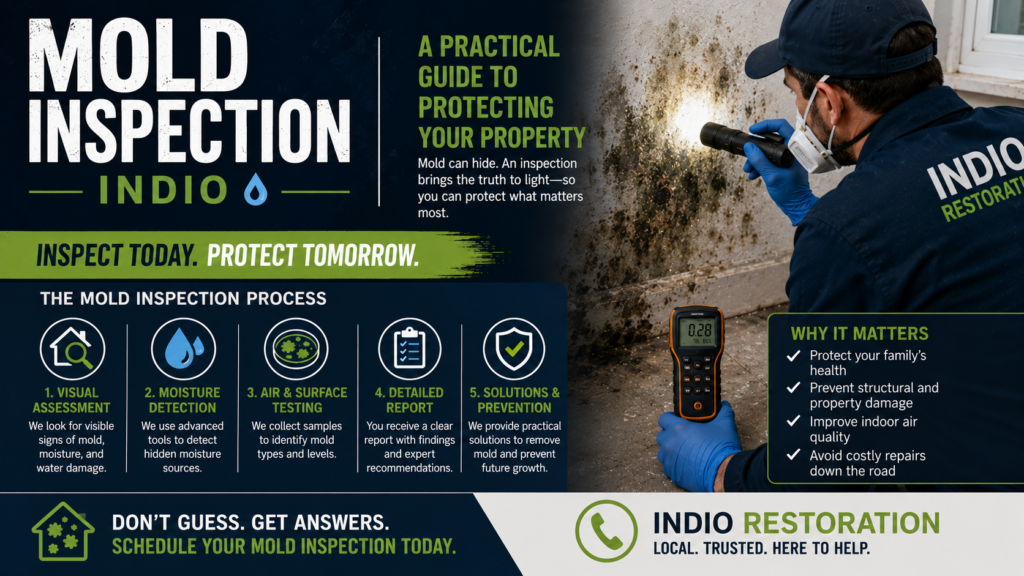
A qualified mold inspector conducts a systematic, methodical examination of a property with the specific goal of identifying current mold growth, conditions that are conducive to mold growth, and evidence of past moisture events that may indicate hidden mold.
The inspection typically begins with a detailed interview. The inspector asks the property owner about the history of water events, any areas of recurring moisture, musty odors, past repairs related to leaks or flooding, and any health symptoms that occupants have attributed to the building. This background information guides the physical inspection that follows.
The physical inspection involves a thorough examination of all accessible areas not just the obviously suspect spaces like bathrooms and under sinks, but attic spaces, crawlspaces, HVAC systems, wall cavities accessible through openings, garage areas, and any space where moisture might accumulate. Inspectors use moisture meters to measure the moisture content of building materials without requiring invasive sampling. Elevated moisture readings in drywall, wood framing, or other materials indicate conditions where mold is likely to be present even if it is not yet visible.
Thermal imaging cameras are increasingly standard tools in mold inspections. These cameras detect temperature differences on surfaces cold spots on walls, for example, may indicate moisture inside wall cavities where insulation has become saturated. This allows inspectors to identify probable hidden moisture issues without destructive investigation.
What Inspectors Look For in Indio Properties
Indio’s housing stock ranges from mid-century ranch homes to newer desert contemporary construction. Older properties present specific inspection priorities. HVAC systems in older homes may have original or aging ductwork with compromised insulation, creating condensation points. Older plumbing may have pinhole leaks that have created ongoing moisture in wall cavities over years. Bathrooms in older homes may have inadequate ventilation, contributing to persistent humidity in tiled areas and adjacent wall materials.
Newer construction has its own considerations. Stucco exterior finishes, common in desert construction, can develop cracks that allow water intrusion during rain events. Tile roofing, also prevalent in the region, develops gaps at aging flashing points. Window and door seals degrade over time in extreme heat, creating pathways for moisture during storms.
HVAC systems deserve particular attention in any Indio mold inspection. The cooling coil in a central air system removes humidity from circulated air, and that condensate must drain properly. Clogged drain pans or improperly sloped drain lines result in standing water adjacent to cooling coils a reliable mold initiation site. Because the air handler circulates air throughout the entire building, mold in the HVAC can affect every room.
Attic spaces in Indio homes can present unexpected mold conditions. Inadequate ventilation combined with any moisture intrusion from a roof leak or from attic-mounted HVAC equipment creates an enclosed, warm space that supports rapid mold growth. In hot climates, attic temperatures can be extreme, but that heat does not eliminate mold risk if moisture is also present.
The Difference Between Mold Inspection and Mold Testing
These two services are related but distinct, and they are often conducted together. A mold inspection is a visual and investigative assessment. Mold testing involves collecting physical samples for laboratory analysis. An inspection without testing can identify visible mold and conditions conducive to growth, but cannot characterize the mold species present or the concentration of airborne spores in areas without visible growth. Testing without inspection lacks the contextual information needed to correctly interpret results or identify problem sources.
For most situations, a combined approach thorough inspection followed by targeted sampling in areas of concern provides the most complete picture. An experienced inspector uses the results of the visual inspection to guide sampling decisions: testing areas where moisture or visible growth was found, collecting outdoor baseline samples for comparison, and sampling the HVAC system if concerns were identified during inspection.
When to Schedule a Mold Inspection in Indio
During a real estate transaction. A mold inspection before purchasing provides objective information about the property’s condition. This is particularly important in Indio’s vacation home market, where properties may have experienced unreported water events or extended vacancy periods.
Following any significant water event. A pipe burst, flooding, roof leak, or appliance failure should be followed by a professional mold inspection approximately two to four weeks after the water event enough time for any mold growth to become detectable if it occurred.
When a musty odor is present. Musty or earthy odors that cannot be attributed to a visible source are a reliable indication of mold growth somewhere in the property. An inspection locates the source.
If occupants experience unexplained health symptoms. Persistent respiratory symptoms, frequent headaches, fatigue, or worsening allergies particularly when symptoms improve during time away from the property may indicate indoor air quality issues. A mold inspection is one component of investigating potential causes.
Before or after renovation work. Renovations that open wall cavities can uncover hidden mold. An inspection before renovation helps identify areas requiring remediation before they are re-enclosed. An inspection after remediation confirms that the work was successful.
Understanding Mold Inspection Reports
A professional mold inspection report documents findings in detail the areas inspected, any visible mold growth observed (with photographs and location descriptions), moisture readings taken throughout the property, conditions observed that are conducive to mold growth, and recommendations for follow-up action.
In Indio, where properties may have specific regional risk factors, a well-prepared inspection report provides not just a snapshot of current conditions but an assessment of ongoing risk and recommended preventive measures. This information has practical value beyond the immediate inspection it guides maintenance priorities, informs renovation decisions, and provides documentation that may be relevant for insurance purposes.
Mold inspection is not a service reserved for obviously distressed properties. It is a responsible, proactive step that provides property owners in Indio with reliable information about an invisible risk factor one that can affect both the structural integrity of their investment and the wellbeing of the people who live or work in the space.
Mold Inspection Indio