
Queue Management System in Saudi Arabia: 5 Audio Fixes That Speed Up Service
Most guides to a queue management system in Saudi Arabia obsess over screens and tickets and forget the one thing customers judge instantly: how clearly they hear their number called and how well the agent hears them back. Sound is the forgotten half of service design. In busy Dhahran and Al Khobar branches during 2026, poor audio is quietly stretching every transaction — and this article fixes that.
We approach queuing from the acoustic angle because we have spent hours on noisy service floors. When the call-out is muffled or the agent keeps saying “sorry, come again?”, the whole line slows. Here is how to fix it.
The link between clear audio and faster queues
A queue only moves as fast as each interaction completes. Every repeated question, every misheard account number, adds seconds that compound across hundreds of customers. Clear announcements and crisp agent audio are therefore not a comfort feature — they are throughput.
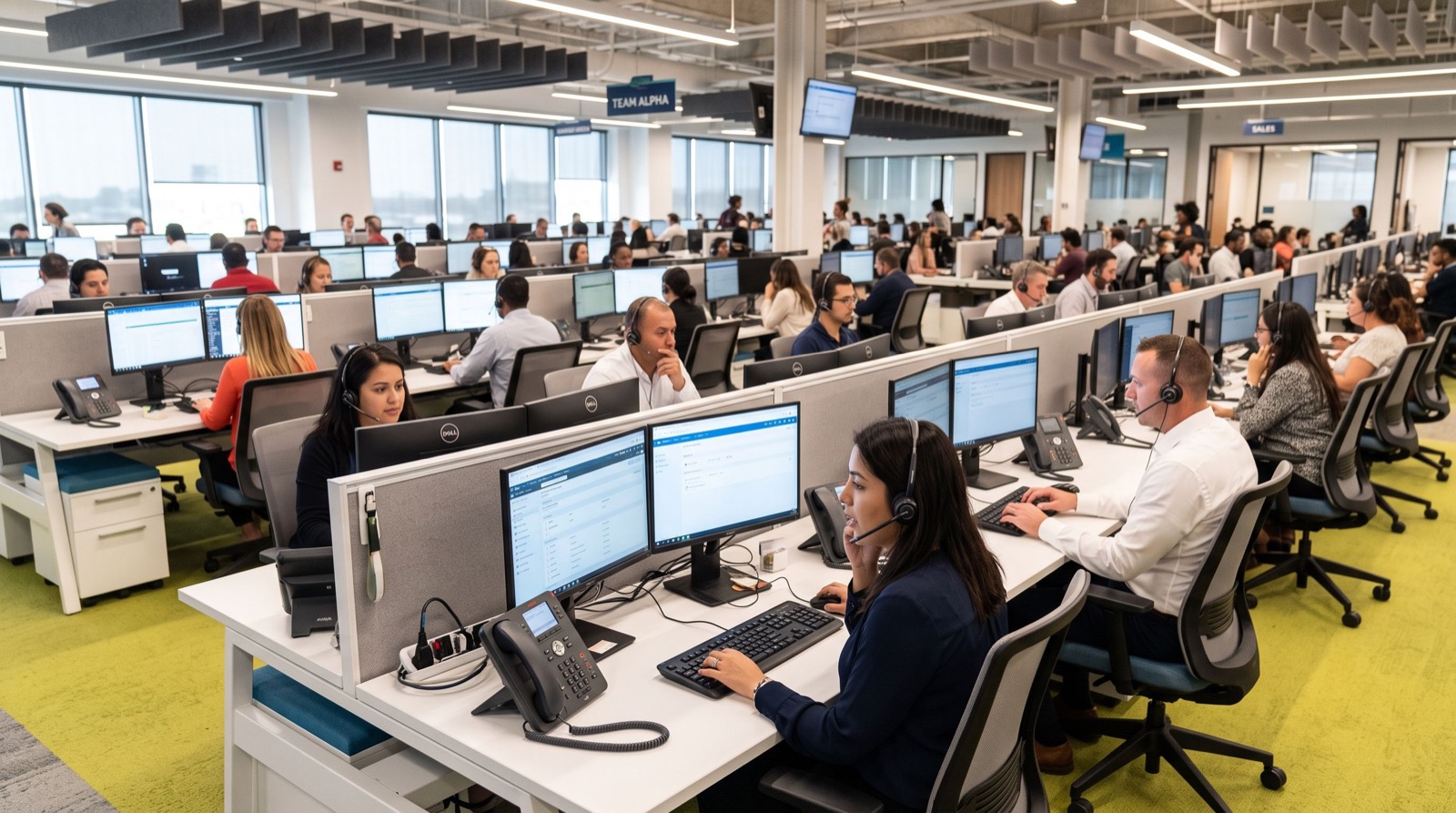
Workplace-noise research from the U.S. CDC / NIOSH shows that sustained background noise above 80 dB measurably degrades concentration and communication accuracy. On a mall service floor near a food court, that threshold is easy to cross. The result is longer handling times and grumpy customers — the exact opposite of what your queuing platform promised.
Where noise sneaks into the queue
- Ambient hum — HVAC, escalators and background music.
- Crowd chatter — the line itself generates noise.
- Cheap call-out speakers — distorted numbers mean people miss their turn.
- Open-ear headsets — agents strain to hear over the room.
Fix 1–5: turning down the chaos
These five fixes deliver the biggest gains, in the order we recommend tackling them:
- Upgrade agent headsets to noise-cancelling models with a clear boom mic.
- Separate the call-out audio zone from background music channels.
- Add visual redundancy — every audio call also flashes on a display.
- Tune display placement so waiting customers face the number, not their phones.
- Measure handling time before and after — the data proves the ROI.
The single highest-impact item is the headset. A professional binaural unit such as the Addasound Crystal 2731 shields the agent from floor noise while delivering wideband voice, so account numbers land right the first time. Pair that hardware with a well-configured queue management system in saudi arabia and the whole counter simply flows faster.
Choosing the right headset for a service floor
Not all headsets suit a loud, public environment. Contact-centre models built for quiet offices underperform on a mall floor. Compare the key specs before buying.
| Spec | Basic Office Headset | Service-Floor Headset |
|---|---|---|
| Noise cancellation | Passive only | Active mic + passive ear |
| Wearing style | Mono | Binaural (both ears) |
| Voice bandwidth | Narrowband | Wideband HD voice |
| Durability | Light use | All-day, reinforced boom |
| Best environment | Quiet office | Busy branch / mall |
Why binaural beats mono in public spaces
Covering both ears blocks far more ambient sound, letting the agent focus fully on the customer. On a quiet floor mono is fine; on a Saudi mall floor at peak hour, binaural is the honest choice.
How do you measure whether audio actually helped?
This is the question managers should ask before spending a riyal. The answer is refreshingly concrete: track average handling time (AHT) and the “repeat request” rate — how often agents ask customers to say something again.
Run a two-week baseline, deploy the new headsets and audio zoning, then measure again. In our experience, branches see AHT drop by 8–15% purely from fewer repeated exchanges. That is throughput you can bank without adding a single counter.
For teams building this into a wider service strategy, partnering with reliable local experts helps align the hardware, the queuing logic and staff training into one coherent plan rather than three disconnected purchases.
An overlooked tip: calibrate volume per branch
Do not set one call-out volume for the whole chain. A branch beside a cinema needs more punch than a quiet corporate lobby. A ten-minute per-site calibration prevents both inaudible whispers and painful blasting.
Bringing audio and queuing together
The best-run branches treat sound and queuing as one system. When a number is called, the audio is crisp, the display flashes in Arabic and English, and the agent — wearing a proper headset — completes the interaction without a single “come again?” That harmony is what customers describe as “efficient,” even if they never notice the headset at all.
Training agents to use audio well
Great hardware still needs good habits. The best headset in the world underperforms if the boom mic sits by the cheek instead of the corner of the mouth. A ten-minute fitting session at rollout prevents weeks of muffled calls, so make it part of every new hire’s first day.
Encourage agents to speak at a steady, moderate pace rather than raising their voice over the floor noise — noise-cancelling mics reward calm, clear speech and punish shouting with distortion. We coach teams to treat the headset as a precision instrument, not a megaphone.
Maintenance keeps the gains alive
- Rotate ear cushions every few months for hygiene and a proper seal.
- Check the boom arm for drift; a loose mic wanders off the mouth.
- Update firmware where the model supports it, for the latest noise profiles.
- Log faults fast so a dead headset never forces an agent onto a speaker phone.
Building the business case for finance leaders
When you take an audio upgrade to a CFO, frame it in throughput, not comfort. Show the baseline handling time, the projected 8–15% reduction, and translate that into extra customers served per agent per day. In a busy Al Khobar branch, even a modest per-transaction saving multiplies into hundreds of recovered minutes each week.
Add the softer wins — fewer complaints about being misheard, lower agent fatigue, higher review scores — and the case writes itself. Audio is one of the rare upgrades that pleases both the finance team and the front-line staff who wear it every shift.
Frequently Asked Questions
Does audio quality really affect a queue management system in Saudi Arabia?
Yes, directly. Clearer call-outs and headset audio cut repeated exchanges, which lowers handling time per customer and moves the whole line faster. Audio is throughput, not decoration.
Are noise-cancelling headsets worth it on a service floor?
On a busy mall or bank floor, absolutely. Active mic noise cancellation and a binaural fit keep the agent focused, which measurably reduces errors on account and order details.
Can I keep my current queuing software and just fix the audio?
Usually yes. Headset and audio-zoning upgrades are largely independent of your queuing software, so you can improve sound without ripping out the platform.
How quickly do the gains show up?
Most branches see a measurable drop in handling time within the first two weeks, once agents adapt to the new headsets and the display-plus-audio redundancy is tuned.
Final word
A queue management system in Saudi Arabia earns its keep only when customers can hear it and agents can hear them. Fix the audio first, measure the handling-time drop, and you will unlock speed that no extra counter could deliver. In 2026, the quietest branches are quietly winning — because their service simply sounds clear.