
Fanvil IP Phones in Karachi: 2026 Enterprise VoIP Guide
Choosing Fanvil IP phones in Karachi has become a practical first step for enterprises replacing ageing PBX hardware. Karachi runs on fast-moving sectors such as logistics, textiles, banking back-offices and BPO call centres, and each of them lives or dies by reliable telephony. In 2026, SIP-based IP phones deliver that reliability at a fraction of legacy line costs.
This guide is written for Karachi IT managers and procurement teams. It explains how to scope a deployment, which features matter at enterprise scale, and how to keep call quality high across multi-floor offices and distributed branches.
Why Karachi enterprises are moving to IP telephony
The old copper-line model charges per minute, limits extensions and ties you to one exchange. VoIP flips that economics. A single SIP trunk over your existing fibre can carry dozens of concurrent calls, and adding an extension is a configuration change rather than a cabling job.
For large Karachi offices, the switch brings measurable gains:
- Lower recurring cost: internal and inter-branch calls become effectively free.
- Central management: provision hundreds of handsets from one dashboard.
- Resilience: reroute calls instantly when a branch loses power or connectivity.
- Scalability: onboard a new floor or seasonal team in hours, not weeks.
When you deploy fanvil ip phones in Karachi, you also gain a consistent hardware platform, which simplifies spares, training and firmware management across the whole organisation.
Matching Fanvil IP phones to enterprise roles
Enterprise deployments succeed when you map handset tiers to job functions rather than buying one model for everyone. A trading-floor user, a receptionist and a CEO need very different devices.
Front office and executives
Client-facing staff benefit from a touchscreen and camera for video meetings. A device like the Fanvil V67 Flagship Smart Video Phone suits boardrooms and executive desks where video calls with overseas partners are routine.
Call-centre and high-volume agents
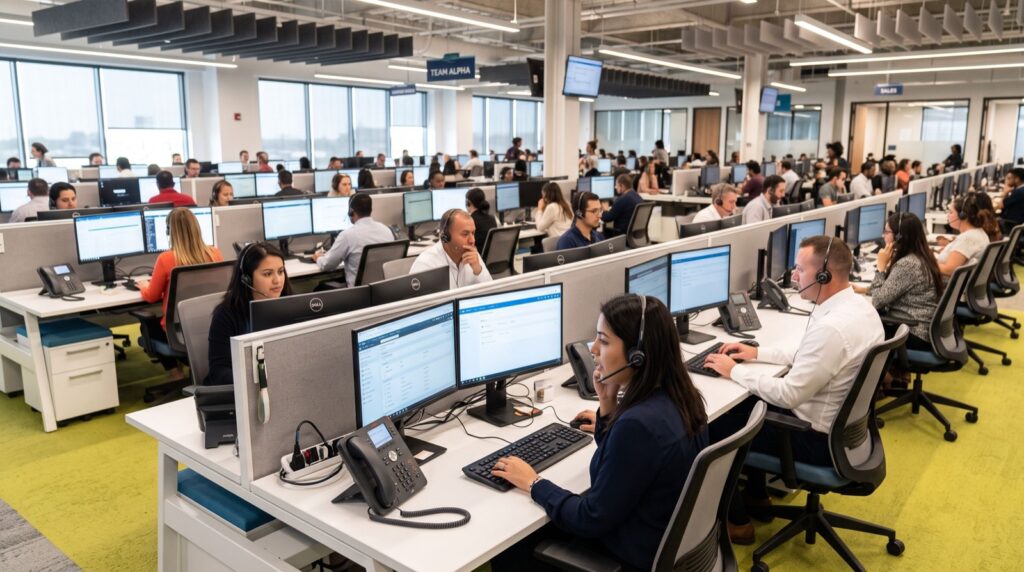
Agents need wideband HD audio, a reliable headset port and busy-lamp fields. Here, durability and acoustic clarity beat touchscreens. A mid-range colour-screen model handles high call volumes without fatigue.
General staff and shop floors
Entry-level IP phones with PoE and a couple of SIP lines cover most desks affordably. You can always upgrade specific users later as needs change.
Spec comparison for Karachi deployments
Use a simple tier table during procurement so finance and IT agree on what each group receives.
| Tier | Key features | Ideal user |
|---|---|---|
| Flagship video | Touchscreen, HD camera, Wi-Fi, many line keys | Executives, boardrooms |
| Mid-range | Colour screen, HD audio, BLF keys, dual Gigabit | Agents, managers |
| Entry voice | PoE, 2-4 SIP lines, mono screen | General staff, floors |
Network and power: the Karachi reality
Two local factors decide whether a rollout feels flawless or flaky: internet stability and load-shedding. Plan for both from day one.
On the network side, segment voice onto its own VLAN and enable QoS so call packets get priority over downloads and backups. The FCC guide to VoIP is a useful plain-language reference on how internet-based calling works and what affects quality.
On power, a practical field tip from Karachi installs: put every PoE switch on a dedicated UPS and keep your SIP gateway on backup too. That way, when the grid drops, the phone fleet keeps ringing even if desktop PCs go dark.
- Use managed PoE switches with per-port power budgeting.
- Keep upload bandwidth headroom of at least 100 kbps per concurrent call.
- Monitor jitter and packet loss with your provider’s dashboard.
- Document extension plans before porting numbers.
Teams without in-house telecom skills should lean on reputable service experts for the initial design and number porting, then manage day-to-day changes internally.
How do you plan a phased rollout?
Large Karachi offices rarely switch everything overnight. A phased plan reduces risk and lets staff adapt without disrupting live customer calls.
- Pilot: deploy to one department, test call flows and quality for two weeks.
- Port numbers: move main lines once the pilot is stable.
- Scale: roll out floor by floor with pre-configured handsets.
- Optimise: review call reports, tune QoS and retire old lines.
Security and compliance for enterprise VoIP
Enterprise buyers in banking, BPO and logistics must treat voice as sensitive data. IP telephony is secure when configured properly, but default settings leave gaps that attackers probe. Build security into the deployment rather than bolting it on later.
- Encrypt signalling and media: enable SIP over TLS and SRTP so calls cannot be intercepted on the LAN.
- Change default passwords: every handset and the PBX admin console need strong, unique credentials.
- Restrict provisioning: limit auto-provisioning to known MAC addresses and your own server.
- Segment and firewall: keep the voice VLAN behind rules that block unexpected outbound SIP traffic.
- Patch firmware: schedule updates centrally so no device runs an outdated, vulnerable build.
A disciplined approach protects both your call records and your toll budget, since unsecured SIP accounts are a common target for fraudulent international dialling.
Measuring success after go-live
Define what good looks like before you switch, then track it. Most PBX dashboards expose the metrics that matter, so review them weekly during the first month.
- Mean opinion score (MOS): a proxy for perceived call quality; aim for 4.0 or higher.
- Jitter and packet loss: keep jitter low and loss under one percent.
- Answer and abandon rates: confirm routing improvements reach customers.
- Cost per call: compare against the old landline baseline to prove savings.
Frequently Asked Questions
Are Fanvil IP phones in Karachi compatible with any PBX?
Yes. They use the open SIP standard, so they work with on-premise IP-PBX systems, hosted cloud PBX and most major SIP trunk providers operating in Pakistan.
How much internet speed do I need for a Karachi call centre?
Budget roughly 100 kbps of upload and download per simultaneous voice call, plus headroom. A business fibre line with QoS easily supports dozens of concurrent agents.
Can I keep my existing Karachi landline numbers?
In most cases you can port existing numbers to a SIP provider, so customers keep dialling the same number while your back end moves to VoIP.
What happens to calls during load-shedding?
With PoE switches and your gateway on a UPS, phones stay live. You can also set failover rules that forward calls to mobiles if a site goes fully offline.
Conclusion
Deploying Fanvil IP phones in Karachi gives enterprises lower call costs, central control and the resilience to keep operating through power and connectivity challenges. The winning formula is simple: match handset tiers to roles, harden the network and power supply, and roll out in phases rather than all at once.
If your organisation is ready to retire its legacy PBX, request a site assessment and a tailored handset plan today, and start cutting telephony costs before the next quarter.